

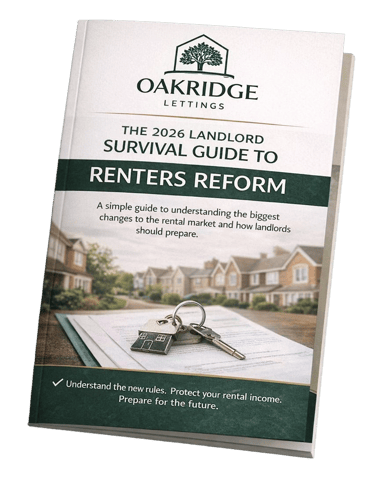
Download Your Free
Landlord Survival Guide
A practical guide to navigating the Renters’ Rights Act and protecting your rental income in a changing rental market.
The private rental sector is entering a period of significant change. Our free guide explains what landlords need to know about the upcoming legislation, how it may affect rental properties, and the practical steps you can take to maintain stable, reliable rental income while remaining fully compliant.
Many landlords are now exploring more structured tenancy arrangements and professional tenant demand to help reduce risk and improve long term rental stability.
The Renters’ Rights Act represents the largest reform of the private rental sector in many years. While the full implementation timeline is still being finalised, landlords should begin preparing for several key changes that will affect tenancy agreements, possession rules and compliance obligations.
Understanding these changes early allows landlords to adapt their rental strategy and focus on stable tenancy arrangements that align with the new regulatory environment.
Key Changes Explained in the Landlord Survival Guide



Removal of Section 21 "No Fault" Evictions
Landlords will no longer be able to rely on Section 21 notices. Landlords will instead rely on a set of defined possession grounds when seeking to recover their property. This change places greater importance on choosing reliable tenants and maintaining well structured tenancy agreements.




Tenancies Moving Towards Periodic Agreements
The reforms move away from fixed term Assured Shorthold Tenancies toward periodic tenancies. Tenancies will continue indefinitely unless either party serves notice under the new rules. This means landlords may increasingly prioritise tenancy arrangements that offer stability and reduced turnover.
Rent Increases Will Follow a Clearer Process
Landlords will still be able to increase rent, but increases will follow a formal notice process designed to provide transparency for tenants. Understanding how and when rent can be reviewed will become increasingly important.


A New Private Rented Sector Database
The government plans to introduce a national database for landlords and rental properties The aim is to improve transparency, raise standards and make it easier for tenants and regulators to identify compliant landlords.


Landlords will likely be required to join a national ombudsman scheme that can resolve disputes between tenants and landlords without court action.
A New Ombudsman Scheme


✔ Understanding the Renters' Rights Act ✔ Protecting your Rental Income
These are just some of the key changes explained in the guide. Download the guide so you'll learn:


✔ Staying Compliant ✔ Reducing Risk

Why Stability Matters More Than Ever




As the rental sector moves toward a new regulatory framework, landlords are increasingly reviewing how their properties are let and managed. With periodic tenancies becoming the standard and possession rules evolving, maintaining stable occupancy and predictable rental income is becoming more important than ever.
Landlords who build their strategy around consistency, reliable tenants and structured management are often better positioned to navigate these changes with confidence. Taking the time to review how your property is currently managed can help ensure your strategy remains aligned with the new rules while protecting your income and creating a more resilient investment for the years ahead.
✔ Longer average tenant stays
✔ Reduced void periods between tenancies
✔ More predictable rental income
✔ Less day to day management stress
✔ Greater long term investment
• Will your current tenancy structure still work under the new legislation?
• How will periodic tenancies affect your property long term?
• Are you comfortable with potential tenant turnover under the new rules?
• Could a more structured letting arrangement reduce risk and
improve stability?
• Is your property management approach prepared for the
changes ahead?
Is Your Rental Strategy Ready For The New Rules?
The Benefits of a Stability-Focused Approach
If you’re reviewing your rental strategy ahead of the new legislation, our team is here to help you plan the next steps with confidence.
Landlord FAQs
When will the Renters' Rights Act come into effect?
The legislation is expected to be implemented following Royal Assent with a transition period allowing landlords and agents time to prepare. Current indications suggest the changes may begin in 2026.
Will fixed term tenancies still exist?
Under the proposed reforms, most tenancies will move towards periodic agreements where tenants remain in place until notice is served under the new rules.
Can landlords still increase rent?
Yes, rent increases will still be permitted but must follow the formal notice process set out within the legislation.
Do landlords need to join a database?
The government plans to introduce a national Private Rented Sector database that landlords may be required to register with.
How can landlords reduce risk under the new rules?
Many landlords are now focusing on stable tenancy arrangements, reliable tenants and structured property management to reduce uncertainty.
Are landlords exploring different letting strategies because of the new legislation?
Yes. As the rental sector adapts to the upcoming reforms, many landlords are reviewing how their properties are let and managed to ensure their approach remains effective under the new framework.
In some cases this includes exploring tenancy arrangements that prioritise stability, longer average occupancy and reliable rental payments. For many landlords, working with professional occupants or structured tenancy agreements can help reduce tenant turnover and create more predictable rental income.
Oakridge Lettings works with landlords to review their current strategy and explain the different options available, helping them choose an approach that aligns with both the new regulations and their long term investment goals.
Do I need to change how I let my property because of the Renters' Rights Act?
The reforms will change how tenancies operate, particularly with the removal of Section 21 and the move towards periodic tenancies. While some landlords may continue using their current approach, many are beginning to review their letting strategy to ensure it remains suitable under the new rules.
Oakridge Lettings helps landlords understand how these changes may affect their property and provides guidance on tenancy structures, management approaches and practical steps that can help maintain stable rental income while remaining compliant.
Can Oakridge Lettings help review my current tenancy agreements?
Yes. Our team regularly works with landlords who want an independent view on how their properties are currently let and managed. By reviewing existing tenancy agreements and management structures, we can help identify whether any adjustments may be beneficial as the new regulations come into effect.
This allows landlords to make informed decisions about their property strategy and ensures their rental arrangements remain aligned with the evolving regulatory framework.
What should landlords do to prepare for the Renters' Rights Act?
Landlords do not necessarily need to make immediate changes, but it is sensible to begin reviewing how their properties are currently let and managed. The upcoming reforms will introduce changes to possession rules, tenancy structures and compliance requirements, so understanding how these updates may affect your property is an important first step.
Many landlords are starting to prepare by reviewing their tenancy agreements, ensuring they understand the new possession grounds and considering how their rental strategy will operate under periodic tenancies.
Oakridge Lettings helps landlords interpret the legislation in practical terms and provides guidance on preparing properties and tenancy arrangements so they remain compliant and financially stable as the new rules are introduced.

Landlords Are Already Preparing
for the Changes
Across the Midlands, many landlords are already beginning to review how their properties are managed in anticipation of the upcoming rental reforms. While every landlord’s situation is different, the common goal is the same, ensuring their property remains compliant, financially stable and well positioned for the future.
At Oakridge Lettings, we work closely with landlords to help them understand the new legislation, review their current tenancy arrangements and implement practical solutions that provide greater stability and peace of mind.
Whether you own a single property or a growing portfolio, having the right strategy in place now can make the transition to the new regulatory landscape far smoother.


✔ Guidance on the upcoming Renters' Rights Act changes
✔ Reviewing existing tenancy agreements and structures
✔ Advice on maintaining stable rental income
✔ Full property management designed to reduce landlord stress
✔ Ongoing compliance support as the legislation evolves
How we support landlords
Get in Touch
If you would like to understand how the upcoming reforms may affect your property, our team would be happy to speak with you.
Book a landlord consultation today and get clear guidance on preparing for the new rental landscape.
© Oakridge Lettings Limited
Quick Links
Services
Our Services
Resources
Contact
E-Mail: info@oakridgelettings.co.uk
Call: 01785 536 070